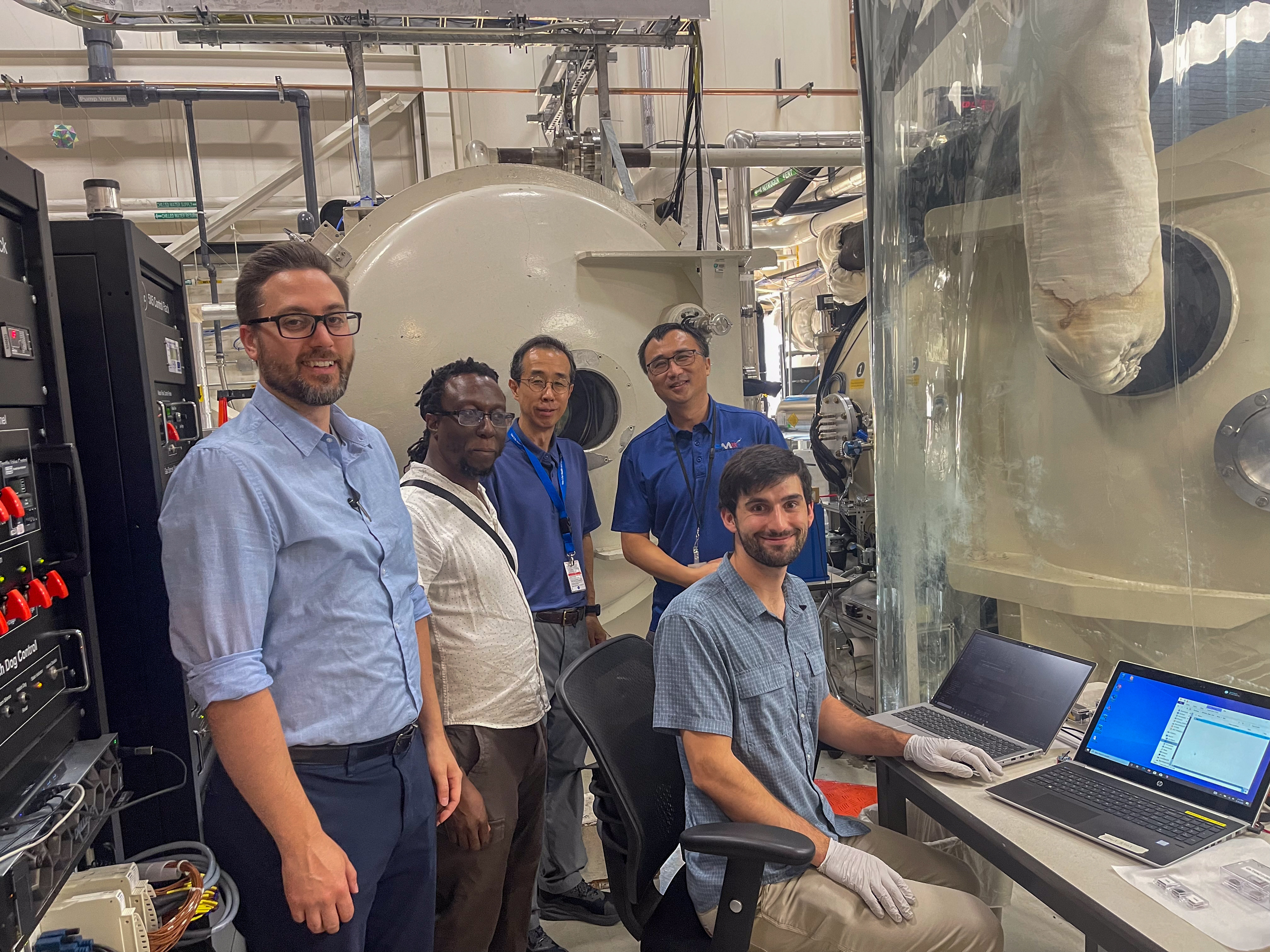
NASA reported new testing results on October 14, 2026, for solid-state batteries intended to help equipment tolerate the Moon’s harsh temperatures. In thermal-vacuum tests at Langley Research Center, small prototype cells operated from 80°C down to minus 60°C, with reduced performance at minus 80°C. The project is called SPEARS, short for Solid Power for Extreme Environment Adaptability and Resilience in Space.
A separate result is equally important: NASA says the cells survived exposure ranging from 100°C to minus 170°C without damage. Survival is different from operation. The agency explicitly says the batteries do not function at minus 170°C; they would need warming before use. Solid ceramic- or polymer-based electrolytes replace the liquid electrolyte, with the aim of improving resilience in extreme environments.
SPEARS began in 2026, and NASA describes it as technology development rather than flight-proven equipment. Ames Research Center is developing supporting electronics and test hardware to prepare for future space testing. No commercial product availability is established by the announcement.
Why the coldest places are scientifically interesting
NASA’s lunar South Pole reference explains that low-angle sunlight and rugged terrain create sharply different conditions over relatively short distances. Some regions remain permanently shadowed and can preserve water ice and other frozen materials. Their composition and distribution are still subjects of investigation. Reaching those places therefore creates a basic engineering conflict: valuable science may sit where solar power and warm operating conditions are hardest to obtain.
Analysis: the mission benefit is flexibility
Consider a hypothetical instrument that must wait through a long inactive period before taking another measurement. If its battery can tolerate that wait cold and then restart after controlled warming, the power system might be designed differently from one that needs continuous heating. The useful comparison would include the energy spent waking up, the time required and the reliability of repeated cycles.
That comparison also shows why a temperature headline alone is insufficient. Engineers would need to know the usable energy at the required discharge rate, how charging behaves, and how performance changes after many cold exposures. A small laboratory cell and an assembled pack face different mechanical, electrical and thermal demands. Wiring, control electronics and protective structures are part of the working system too.
For lunar mission planners, the right question is which operations become feasible with a better survival envelope. Could an instrument wait longer between observations? Could a rover allocate more energy to movement or sensing? Those are plausible design questions, not demonstrated capabilities of the current prototypes. They require mission-specific testing before becoming dependable benefits.
The broader battery lesson is useful on Earth as well: operating temperature, storage survivability and restart behavior are separate specifications. NASA’s results make that distinction unusually clear. The next evidence to watch is how the cells perform in larger integrated hardware and repeated representative duty cycles. A promising survival test is a meaningful step, while leaving substantial engineering between the laboratory and a lunar deployment.