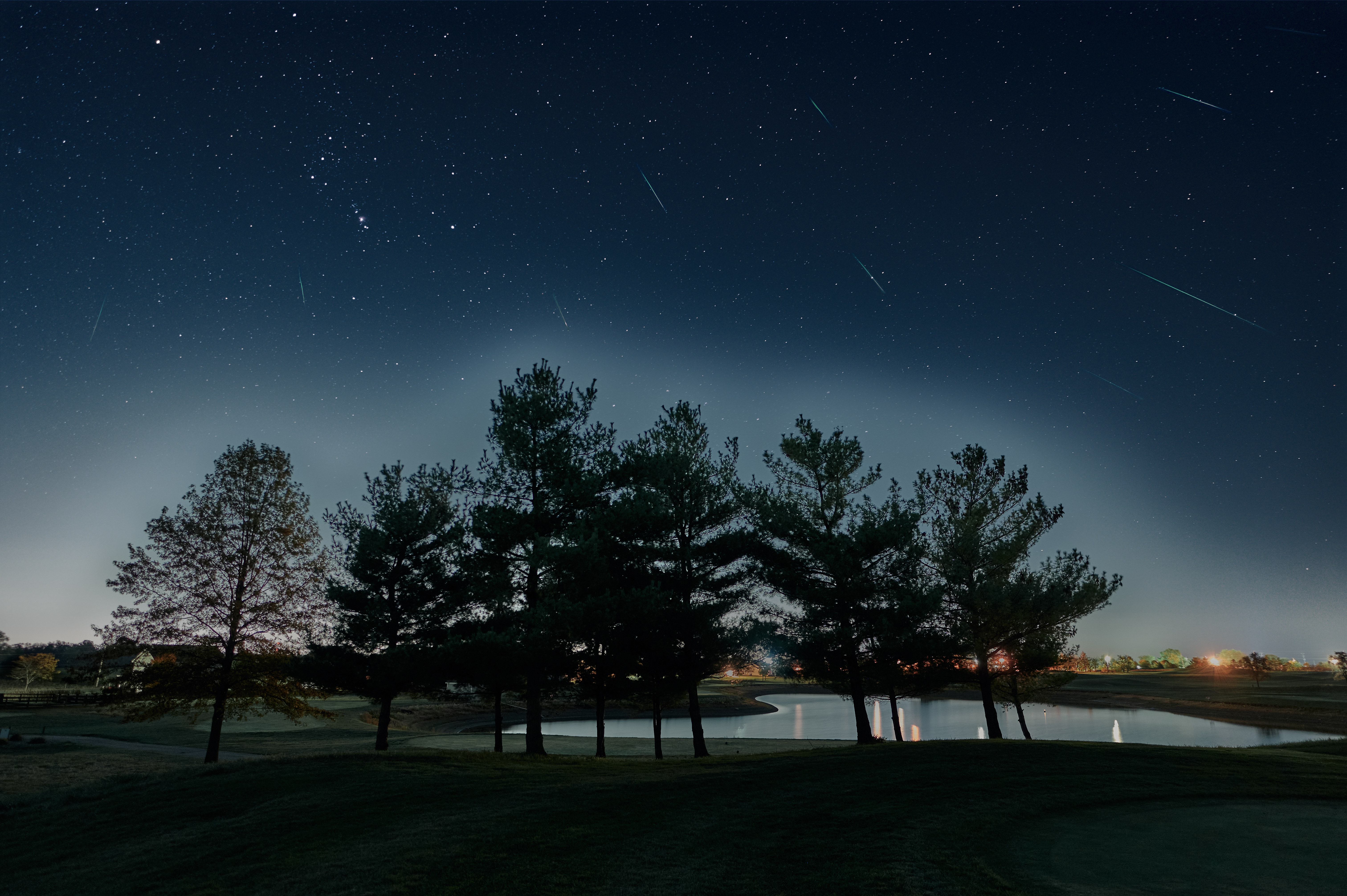
The Orionid meteor shower is approaching its October 21–22 peak, with an important complication for this year's view: moonlight. NASA's October skywatching guide says a bright waxing gibbous Moon will make fainter meteors harder to see and suggests looking before dawn after the Moon has set.
The Orionids come from debris left by Halley's Comet. Although their apparent origin lies toward Orion, the streaks can appear across the sky. NASA's guidance is to choose a dark location and allow time for your eyes to adapt rather than watch only one small patch.
What a peak does and does not mean
A peak describes the expected high point of activity, not a guarantee of a spectacular display at a specific minute. The view from any location still depends on cloud cover, light pollution, the Moon and the amount of sky that is visible. This is not a local weather forecast or a promise of a particular number of meteors.
NASA's general Orionid guide recommends viewing after midnight and giving your eyes time to adjust to darkness. It also explains that the shower can be observed from both hemispheres. The practical opportunity is to spend time under a broad, dark sky; magnifying a tiny area is not the aim of this kind of observing.
Plan a comfortable, realistic outing
For an ordinary evening plan, work backward from the conditions you need. Check the local forecast and moonset time for the place you will actually visit. A site that looks dark on a map is only useful if it is legally accessible at the hour you intend to be there and offers a safe place to stop.
Bring layers suitable for the overnight temperature and a comfortable way to sit or recline. Decide in advance how long you want to stay so a quiet stretch does not feel like a failed trip. Avoid an observing position near moving traffic or somewhere that requires crossing unsafe terrain in darkness.
Our take: this is a good event to approach as a relaxed night-sky outing rather than a performance with a fixed start time. The reward may be a handful of bright streaks, or simply a clearer view of familiar constellations. That expectation leaves room for the real conditions instead of competing with dramatic photographs.
The calendar provides a useful target, but the final decision belongs to your local sky. Recheck the forecast close to departure and keep the plan flexible. A patient observer in a suitable location has made the choices within their control; the rest is part of watching nature.